
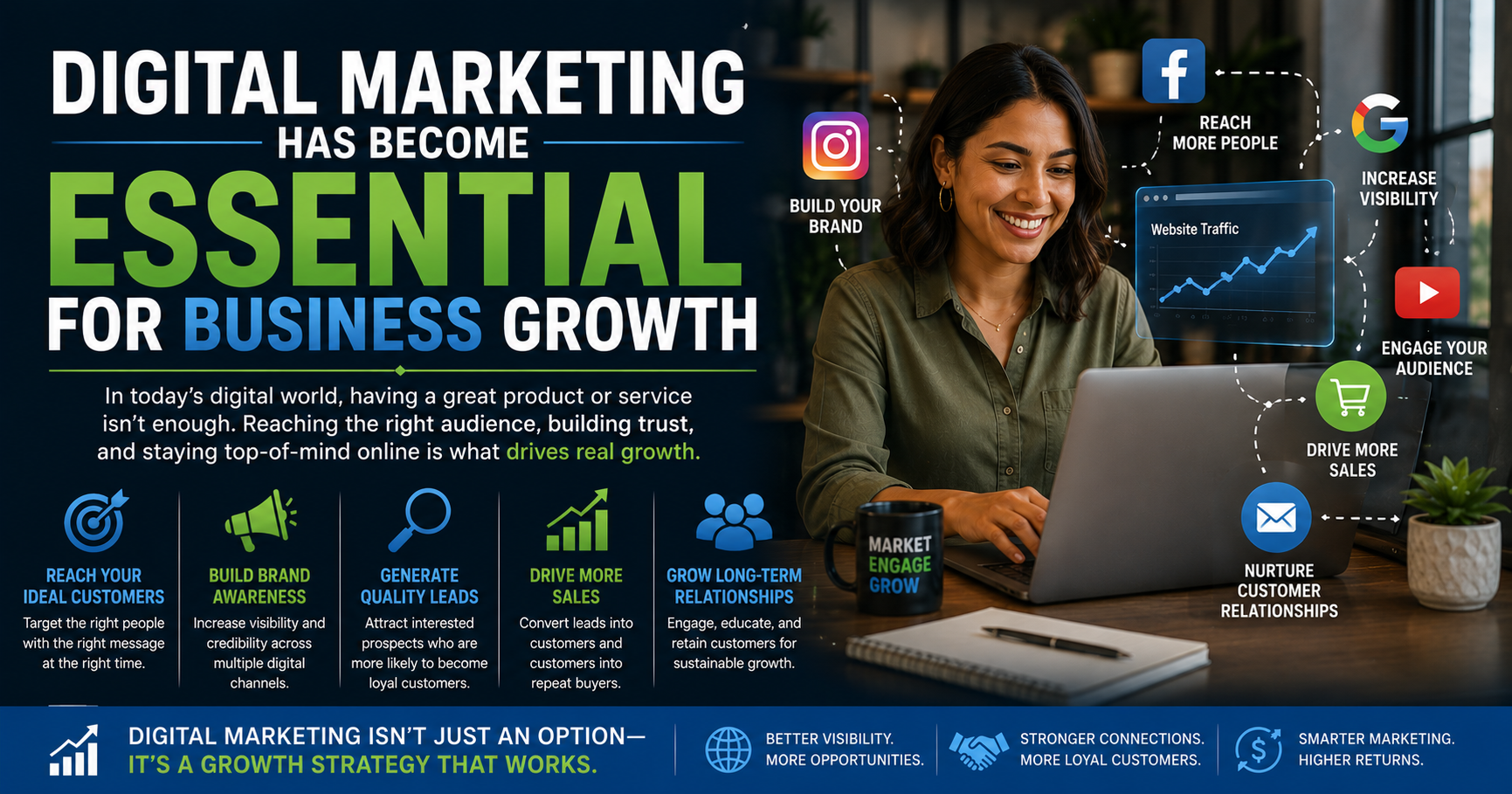
Why Digital Marketing Has Become Essential for Business Expansion
Reaching Customers Where They Spend Time
The way consumers discover products and services has changed dramatically over the past decade. Traditional advertising methods such as newspaper ads, radio spots, billboards, and direct mail campaigns once dominated marketing budgets. While many of these channels still have value, the reality is that today’s consumers spend a significant portion of their time online, and businesses that want to remain competitive must adapt accordingly.
Whether searching for a local service provider, researching a major purchase, comparing products, or reading customer reviews, consumers increasingly begin their buying journey through digital channels. Search engines, social media platforms, online directories, video content, email newsletters, and review websites have become essential parts of the modern purchasing process.
As a result, digital marketing has evolved from an optional strategy into a fundamental business necessity.
The Digital Consumer Journey
Modern consumers are more informed than ever before.
Before making purchasing decisions, many people conduct extensive research online. They compare prices, read reviews, watch product demonstrations, visit company websites, and seek recommendations from friends, influencers, and online communities.
In many cases, potential customers form opinions about a business long before speaking with a sales representative or visiting a physical location.
This shift in consumer behavior means businesses must establish a strong online presence wherever their target audience spends time.
If a company cannot be found online, consumers may assume it is less credible or less established than competitors who maintain active digital profiles.
Search Engines Drive Discovery
Search engines remain one of the most powerful tools for connecting businesses with potential customers.
Every day, millions of people use search engines to find answers, compare products, locate service providers, and solve problems. Businesses that appear prominently in search results often gain a significant advantage because they are visible at the exact moment consumers are actively seeking solutions.
Search Engine Optimization (SEO) helps businesses improve their visibility in organic search results. By creating relevant content, optimizing website performance, and targeting valuable keywords, companies can attract highly qualified traffic without relying exclusively on paid advertising.
For many businesses, appearing on the first page of search results can lead to increased website traffic, more inquiries, and higher sales.
Social Media Has Become a Business Essential
Social media platforms have transformed the relationship between businesses and consumers.
Platforms such as Facebook, Instagram, LinkedIn, YouTube, TikTok, and X provide businesses with opportunities to engage directly with their audiences, share valuable content, showcase products, and build brand awareness.
Unlike traditional advertising, social media encourages two-way communication. Businesses can interact with customers, answer questions, address concerns, and create communities around their brands.
Consumers increasingly expect businesses to maintain active social media profiles. A strong social media presence can help build trust, increase visibility, and create stronger customer relationships.
Companies that consistently provide valuable and engaging content often develop loyal audiences that support long-term growth.
Content Marketing Builds Trust and Authority
One of the most effective forms of digital marketing is content marketing.
Rather than focusing solely on promotional messages, content marketing involves creating educational, informative, and engaging content that helps consumers solve problems or answer questions.
This may include:
- Blog articles
- Videos
- Podcasts
- Infographics
- E-books
- Webinars
- Industry reports
- Social media content
When businesses consistently provide valuable information, they position themselves as trusted authorities within their industries.
Consumers are more likely to purchase from companies they view as knowledgeable and credible. Content marketing helps establish that trust while improving search engine visibility and supporting broader marketing goals.
Email Marketing Remains Highly Effective
Despite the growth of social media and other digital channels, email marketing continues to be one of the most effective methods for communicating with customers.
Email allows businesses to maintain direct contact with prospects and existing customers while delivering personalized messages based on interests, behaviors, and purchasing history.
Successful email campaigns can nurture leads, promote special offers, announce new products, share educational content, and strengthen customer relationships.
Unlike social media platforms, where algorithm changes can affect visibility, email provides businesses with direct access to their audiences.
For many organizations, email marketing remains one of the highest-performing channels for generating sales and customer engagement.
Online Reviews Influence Buying Decisions
Consumer trust increasingly depends on online reputation.
Before making purchasing decisions, many customers read reviews on platforms such as Google, Yelp, Facebook, and industry-specific websites.
Positive reviews help establish credibility and encourage potential customers to choose a business over competitors. Negative reviews, if not properly managed, can discourage prospects and impact revenue.
Online reputation management has therefore become a critical component of digital marketing.
Businesses that actively monitor reviews, respond professionally to feedback, and prioritize customer satisfaction often enjoy stronger reputations and greater consumer confidence.
Data Makes Marketing More Effective
One of the greatest advantages of digital marketing is the ability to measure performance.
Unlike many traditional advertising methods, digital marketing provides detailed data about customer behavior and campaign effectiveness.
Businesses can track:
- Website traffic
- Conversion rates
- Customer engagement
- Advertising performance
- Email open rates
- Social media interactions
- Lead generation metrics
These insights allow business owners to make informed decisions, improve campaigns, and allocate marketing budgets more efficiently.
Data-driven marketing helps businesses identify what is working, eliminate ineffective strategies, and continuously optimize results.
The Future of Business Growth Is Digital
Consumer habits continue to shift toward digital channels, and there is little indication that this trend will slow down.
As technology advances and online activity increases, businesses that embrace digital marketing will likely be better positioned to attract customers, generate leads, and build sustainable growth.
Companies that invest in search visibility, content creation, social media engagement, email marketing, and online reputation management often gain a competitive advantage in increasingly crowded markets.
Digital marketing is no longer simply a marketing tactic—it is a business growth strategy.
The businesses that consistently reach customers where they spend time, provide value through digital channels, and build meaningful online relationships are frequently the companies that experience the strongest long-term success. In today’s marketplace, visibility, engagement, and trust are increasingly earned online, making digital marketing one of the most important investments a business can make.