Rising Utility Costs Are Pushing Businesses to Explore Energy Savings


Lowering Expenses Through Smarter Energy Management

For businesses across nearly every industry, controlling operating expenses has become an increasingly important priority. Rising costs associated with labor, inventory, insurance, rent, transportation, and supplies continue to place pressure on profit margins. Among these expenses, utility costs often represent one of the largest and most unpredictable budget items.

Electricity, heating, cooling, refrigeration, lighting, manufacturing equipment, and other operational energy demands can significantly impact monthly expenses. For businesses operating large facilities, multiple locations, warehouses, retail stores, restaurants, medical offices, or manufacturing operations, utility bills can quickly become a major financial burden.

As energy prices continue to fluctuate and utility rates rise in many regions, businesses are increasingly seeking smarter ways to manage consumption and reduce costs. Through improved efficiency, modern technologies, and strategic energy planning, many organizations are discovering opportunities to lower expenses while improving long-term sustainability.

In today’s competitive business environment, smarter energy management is becoming more than a cost-saving strategy—it is becoming a critical component of financial success.

Rising Utility Costs Are Affecting Businesses Nationwide

Energy costs have become a growing concern for organizations of all sizes.

Whether operating a small office, a retail storefront, or a large industrial facility, businesses depend on reliable energy to support daily operations. Unfortunately, utility rates continue to experience volatility due to changing energy markets, infrastructure investments, environmental regulations, and increased demand.

For many businesses, rising utility costs reduce profitability without generating any additional value for customers.

Unlike investments in marketing, employee training, or product development, higher utility bills rarely contribute directly to business growth.

As a result, business owners are increasingly focused on identifying ways to reduce energy consumption without sacrificing operational efficiency.

Understanding Where Energy Is Being Used

One of the first steps toward reducing utility expenses is understanding how energy is being consumed.

Many businesses are surprised to learn that significant amounts of energy are often wasted through inefficient systems, outdated equipment, or unnecessary usage patterns.

Common sources of energy waste include:

  • Aging HVAC systems
  • Inefficient lighting
  • Poor insulation
  • Equipment left running after hours
  • Inefficient refrigeration systems
  • Outdated electrical equipment
  • Improper thermostat settings
  • Air leaks and ventilation issues

Without proper analysis, these inefficiencies can remain hidden for years while steadily increasing operating expenses.

Identifying these areas is often the foundation of a successful energy management strategy.

Energy Audits Reveal Hidden Opportunities

Many organizations begin their energy-saving efforts by conducting professional energy audits.

An energy audit provides a comprehensive assessment of how a facility consumes energy and identifies opportunities for improvement.

During an audit, specialists evaluate equipment performance, building efficiency, lighting systems, heating and cooling operations, insulation, and overall energy usage patterns.

The findings often reveal inefficiencies that business owners may not have previously recognized.

In many cases, relatively small adjustments can produce meaningful savings.

Examples may include:

  • Replacing outdated lighting
  • Adjusting operating schedules
  • Upgrading thermostats
  • Improving insulation
  • Repairing air leaks
  • Optimizing equipment settings

These improvements frequently generate measurable reductions in utility expenses with relatively modest investments.

Energy-Efficient Lighting Delivers Quick Results

Lighting is one of the most common opportunities for cost reduction.

Many businesses still operate older lighting systems that consume substantially more electricity than modern alternatives.

LED lighting technology has become increasingly popular because it provides significant energy savings while improving illumination quality and reducing maintenance requirements.

Compared to traditional incandescent or fluorescent lighting, LED systems consume less energy and often last much longer.

For businesses operating large facilities, retail spaces, warehouses, or office environments, lighting upgrades can generate noticeable reductions in monthly utility costs.

Many organizations experience a relatively quick return on investment after making the transition.

Smarter HVAC Systems Improve Efficiency

Heating and cooling systems often account for a significant portion of commercial energy consumption.

Outdated HVAC equipment can operate inefficiently, leading to excessive energy use and higher utility bills.

Modern HVAC systems offer substantial improvements in efficiency while providing greater control over indoor environments.

Smart thermostats, automated temperature controls, zoning systems, and energy management software allow businesses to optimize heating and cooling schedules based on occupancy and operational needs.

These technologies help reduce unnecessary energy consumption while maintaining comfort for employees and customers.

Proper maintenance also plays an important role in maximizing HVAC efficiency.

Regular inspections, filter replacements, and equipment servicing can improve performance while extending system lifespan.

Automation Is Transforming Energy Management

Advancements in technology are making energy management more sophisticated and effective than ever before.

Automated energy management systems allow businesses to monitor and control energy usage in real time.

These systems can:

  • Track energy consumption
  • Identify inefficiencies
  • Automatically adjust settings
  • Monitor equipment performance
  • Generate energy reports
  • Detect unusual usage patterns

By leveraging automation, businesses can make more informed decisions and respond quickly to changing energy demands.

Many organizations use these technologies to create ongoing energy optimization strategies rather than relying solely on periodic evaluations.

Solar Energy Is Becoming Increasingly Attractive

Solar energy has emerged as one of the most popular long-term solutions for businesses seeking greater control over utility expenses.

Advancements in solar technology, financing options, and installation methods have made renewable energy more accessible than ever before.

Many businesses are exploring solar solutions to:

  • Reduce monthly utility bills
  • Stabilize long-term energy costs
  • Protect against future rate increases
  • Improve sustainability initiatives
  • Strengthen environmental responsibility efforts

Depending on location, facility characteristics, and energy usage patterns, solar systems may generate substantial savings over time.

For some businesses, solar energy represents an opportunity to transform a recurring operating expense into a long-term financial asset.

Sustainability Is Becoming a Competitive Advantage

Reducing energy consumption offers benefits beyond cost savings.

Today’s consumers increasingly value environmental responsibility and sustainable business practices.

Many customers prefer supporting companies that actively work to reduce their environmental impact.

Businesses that implement energy-efficient technologies and renewable energy solutions often strengthen their brand reputation while demonstrating commitment to responsible resource management.

These efforts can improve customer perception, support corporate social responsibility initiatives, and create additional competitive advantages.

As environmental awareness continues growing, sustainability is becoming an increasingly important component of business strategy.

Energy Management Supports Long-Term Growth

Ultimately, smarter energy management is about more than reducing monthly utility bills.

Lower energy costs improve cash flow, increase profitability, and create additional resources that can be reinvested into business growth.

Funds saved through energy efficiency can support:

  • Hiring additional employees
  • Expanding operations
  • Investing in marketing
  • Upgrading technology
  • Improving customer experiences
  • Developing new products and services

By reducing waste and optimizing energy usage, businesses strengthen their financial position while preparing for future growth opportunities.

A Strategic Approach to Controlling Costs

As utility rates continue to rise and economic pressures increase, businesses can no longer afford to overlook energy management.

Organizations that proactively evaluate energy consumption, implement efficiency improvements, leverage modern technologies, and explore renewable energy solutions often position themselves for stronger long-term performance.

Whether through energy audits, lighting upgrades, HVAC improvements, automation systems, or solar energy investments, smarter energy management offers meaningful opportunities to reduce expenses and improve profitability.

In an environment where every dollar matters, controlling utility costs may be one of the most practical and impactful strategies available to business owners. By lowering expenses through smarter energy management, businesses can create stronger financial foundations while supporting sustainability goals that benefit both their organizations and the communities they serve.


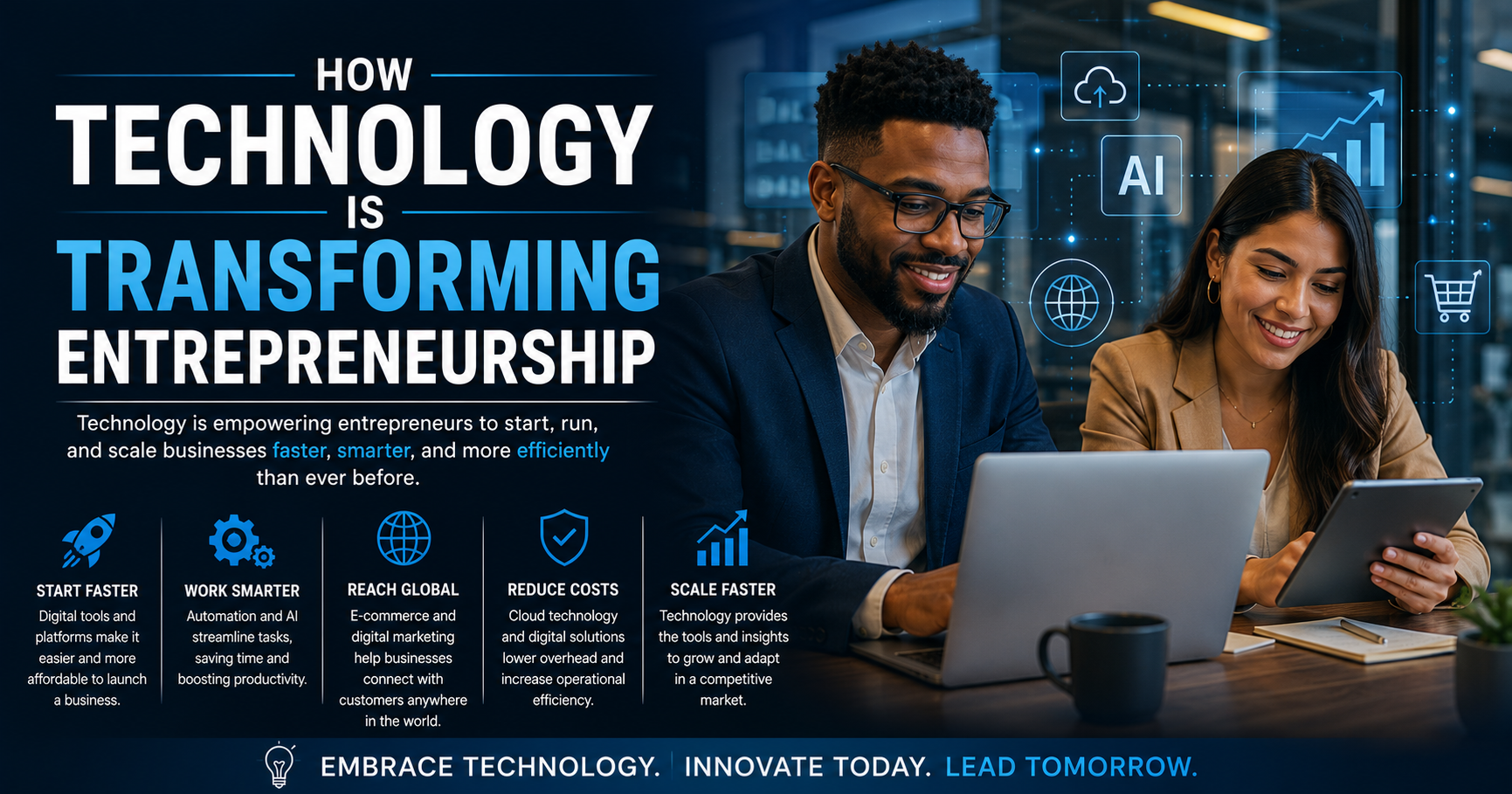
How Technology Is Fueling the Next Generation of Entrepreneurs


Innovation Creates New Business Possibilities

Technology continues to transform nearly every aspect of entrepreneurship, creating opportunities that were once unimaginable for small business owners and aspiring entrepreneurs. What previously required significant capital, large teams, expensive infrastructure, and years of development can now often be accomplished with affordable digital tools and cloud-based platforms.

The rapid advancement of technology is reshaping how businesses are started, operated, marketed, and scaled. Entrepreneurs today have access to resources that allow them to compete in ways that were once reserved for large corporations with substantial budgets and extensive personnel.

As innovation continues to accelerate, business owners who embrace technology are discovering new opportunities to increase efficiency, reduce costs, reach broader audiences, and build more resilient organizations.

In many ways, technology has become one of the greatest equalizers in modern business.

Technology Has Lowered the Barriers to Entry

Historically, launching a business often required significant upfront investment.

Entrepreneurs needed office space, specialized equipment, large marketing budgets, extensive staffing, and access to costly technology systems. These barriers made business ownership difficult for many aspiring entrepreneurs.

Today, technology has dramatically reduced many of those obstacles.

A business owner can launch a professional website, accept online payments, manage customer relationships, automate marketing campaigns, and operate remotely using affordable software solutions available through monthly subscriptions.

Cloud computing has been particularly transformative.

Rather than investing thousands of dollars in servers and technology infrastructure, businesses can access powerful computing resources on demand. This allows entrepreneurs to scale operations quickly while minimizing startup costs.

As a result, individuals with innovative ideas can bring products and services to market faster and more efficiently than ever before.

Artificial Intelligence Is Reshaping Entrepreneurship

Few technological developments have generated as much excitement as artificial intelligence.

AI is rapidly changing how entrepreneurs operate their businesses by helping automate repetitive tasks, improve decision-making, and increase productivity.

Business owners are increasingly using artificial intelligence to:

  • Create marketing content
  • Generate social media posts
  • Draft emails and newsletters
  • Analyze customer behavior
  • Conduct market research
  • Improve customer service
  • Optimize advertising campaigns
  • Streamline administrative tasks

These capabilities allow entrepreneurs to accomplish more in less time while reducing operational costs.

Tasks that once required multiple employees can often be completed using AI-powered tools, freeing entrepreneurs to focus on strategy, innovation, and growth.

As artificial intelligence continues evolving, experts believe its impact on entrepreneurship will only increase.

Businesses that learn to effectively integrate AI into their operations may gain significant competitive advantages in the years ahead.

Automation Creates Greater Efficiency

Automation is another powerful force transforming modern entrepreneurship.

Many routine business processes can now operate with minimal human intervention.

Automated systems can manage:

  • Appointment scheduling
  • Customer follow-up communications
  • Inventory tracking
  • Invoice generation
  • Lead nurturing
  • Marketing campaigns
  • Customer support requests
  • Data collection and reporting

By automating repetitive tasks, entrepreneurs can reduce labor costs, minimize human error, and improve operational consistency.

This efficiency allows business owners to focus their energy on activities that drive revenue and create value for customers.

For many entrepreneurs, automation has become a critical component of scalability.

Digital Marketing Expands Market Reach

Technology has also revolutionized how businesses connect with customers.

In the past, reaching large audiences often required expensive advertising through television, radio, newspapers, or direct mail campaigns.

Today, entrepreneurs can market products and services through digital channels that offer significantly greater targeting capabilities and measurable results.

Search engines, social media platforms, email marketing systems, video content, and online advertising networks allow businesses to reach specific audiences based on demographics, interests, behaviors, and purchasing patterns.

This precision enables entrepreneurs to maximize marketing budgets while generating higher-quality leads.

Even small businesses can now compete for attention in national and global markets.

Digital marketing has democratized customer acquisition and created opportunities for businesses of all sizes to grow.

E-Commerce Creates Global Opportunities

The growth of e-commerce has expanded business possibilities far beyond local markets.

Entrepreneurs no longer need multiple physical locations to reach customers across the country or around the world.

Online stores, digital marketplaces, and fulfillment services allow businesses to sell products globally while operating from a single location.

Consumers increasingly prefer the convenience of online shopping, creating new opportunities for entrepreneurs to launch product-based businesses with relatively low overhead.

The ability to reach larger audiences has enabled countless businesses to scale faster and generate revenue from customers who would have been inaccessible through traditional retail models.

E-commerce continues to open doors for entrepreneurs willing to embrace digital commerce strategies.

Data Is Driving Smarter Decisions

Modern technology provides entrepreneurs with access to unprecedented amounts of data.

Businesses can now monitor customer behavior, track marketing performance, evaluate sales trends, and analyze operational efficiency in real time.

This information helps entrepreneurs make more informed decisions and identify opportunities for improvement.

Rather than relying solely on intuition, business owners can leverage analytics to understand what is working and where adjustments may be needed.

Data-driven decision-making often leads to:

  • Improved customer experiences
  • More effective marketing campaigns
  • Higher conversion rates
  • Better resource allocation
  • Increased profitability

Access to actionable insights has become a significant advantage for businesses that understand how to use data effectively.

Innovation Is Creating Entirely New Industries

Technology is not only improving existing businesses—it is creating entirely new business models and industries.

The rise of artificial intelligence, renewable energy, digital education, software-as-a-service platforms, creator economies, remote work technologies, and online consulting services has generated opportunities that did not exist just a few years ago.

Entrepreneurs are finding innovative ways to solve problems, deliver services, and create value using technologies that continue to evolve at remarkable speed.

Those who stay informed about emerging trends often position themselves to capitalize on new opportunities before markets become saturated.

Innovation frequently rewards individuals who are willing to experiment, adapt, and embrace change.

The Human Element Still Matters

Despite the rapid advancement of technology, successful entrepreneurship remains rooted in human creativity, leadership, and problem-solving.

Technology serves as a powerful tool, but it cannot replace vision, strategic thinking, relationship-building, and customer understanding.

The most successful entrepreneurs are often those who combine technological capabilities with strong interpersonal skills and a deep understanding of customer needs.

Innovation works best when technology enhances human strengths rather than attempting to replace them.

This balance allows businesses to remain efficient while maintaining the personal connections that customers value.

The Future Belongs to Innovative Entrepreneurs

Experts predict that technology will continue transforming entrepreneurship for decades to come.

Artificial intelligence, automation, cloud computing, advanced analytics, and emerging digital platforms will likely create even more opportunities for innovation and growth.

Entrepreneurs who remain adaptable and open to change will be best positioned to benefit from these developments.

Innovation is no longer optional in today’s business environment. Companies that resist technological advancement risk falling behind competitors that embrace new tools and strategies.

For modern entrepreneurs, technology represents more than convenience—it represents opportunity.

Those who effectively combine human creativity with technological innovation may find themselves positioned to capitalize on some of the largest business opportunities of the next decade. In a rapidly evolving economy, embracing innovation may ultimately be the difference between merely surviving and truly thriving.

Why Small Businesses Are Becoming the Backbone of Local Economies


Community Growth Starts With Entrepreneurs

Across cities and towns throughout America, small businesses continue to serve as the foundation of local economic growth and community development. While large corporations often dominate national headlines, it is entrepreneurs and small business owners who frequently create the unique character, economic vitality, and opportunities that help communities thrive.

From family-owned restaurants and neighborhood retail stores to construction companies, healthcare providers, technology startups, and professional service firms, entrepreneurs play a vital role in strengthening local economies. Their contributions extend far beyond simply selling products or services. They create jobs, support local organizations, invest in community initiatives, and help generate the economic activity that keeps communities growing.

As economic conditions continue to evolve, many experts believe that the long-term success of local communities will increasingly depend on the ability of entrepreneurs to innovate, adapt, and build sustainable businesses that serve local needs.

Small Businesses Are Powerful Economic Engines

Entrepreneurs contribute significantly to economic development because they create opportunities where none previously existed.

Every new business begins with an idea. Whether it’s solving a problem, meeting a consumer need, or improving an existing service, entrepreneurs identify opportunities and transform them into businesses that generate revenue and employment.

When a business opens its doors, it often hires local employees, purchases supplies from nearby vendors, leases commercial space, and pays local taxes. These activities create a ripple effect throughout the community.

For example, a new restaurant may hire cooks, servers, managers, and cleaning staff. It may purchase ingredients from local suppliers, use local contractors for maintenance, and partner with nearby businesses for marketing efforts. The wages earned by employees are then spent throughout the community, supporting additional businesses and services.

This cycle of economic activity helps create stronger and more resilient local economies.

Job Creation Begins With Entrepreneurs

One of the most important contributions entrepreneurs make is job creation.

Small businesses collectively employ millions of workers across the United States and often provide employment opportunities that larger organizations may overlook.

Entrepreneurs frequently hire individuals from within their communities, creating jobs for local residents and helping families achieve greater financial stability.

In many towns and cities, small businesses represent one of the largest sources of employment. They offer positions across a wide variety of industries, including retail, hospitality, healthcare, construction, professional services, education, and technology.

As businesses grow, they often create additional opportunities for advancement, training, and career development.

This ability to generate employment not only benefits individual workers but also strengthens the broader economic health of entire communities.

Local Businesses Keep Money in Local Communities

Economic studies consistently show that locally owned businesses often reinvest a greater percentage of their revenue back into their communities compared to national chains or large corporations.

When consumers spend money at local businesses, more of those dollars tend to remain within the local economy.

Business owners frequently purchase goods and services from nearby suppliers, hire local contractors, support community organizations, and contribute to local charitable causes. This circulation of money helps create additional economic activity and strengthens the overall financial health of the region.

Many entrepreneurs also sponsor youth sports teams, community events, nonprofit organizations, and educational programs that directly benefit local residents.

Their investments help improve the quality of life within their communities while fostering stronger relationships among residents and businesses.

Innovation Often Starts Small

Entrepreneurs are frequently responsible for some of the most innovative ideas and solutions in the marketplace.

Unlike larger organizations that may face complex approval processes and bureaucratic structures, small businesses can often adapt quickly to changing customer needs and market conditions.

This flexibility allows entrepreneurs to experiment with new products, services, technologies, and business models.

Many successful companies that operate globally today began as small entrepreneurial ventures founded by individuals who recognized opportunities that others overlooked.

Innovation is not limited to technology startups. Entrepreneurs across every industry continue finding creative ways to improve customer experiences, streamline operations, and solve everyday challenges.

Their willingness to take risks and pursue new ideas helps drive economic progress and industry advancement.

Technology Is Expanding Opportunities

Modern technology has dramatically increased the ability of entrepreneurs to compete with larger organizations.

Digital marketing, social media, e-commerce platforms, cloud-based software, and artificial intelligence tools allow small businesses to reach customers far beyond their local markets.

A business owner operating from a small town can now sell products nationwide, offer virtual services globally, or build an online audience that generates revenue from multiple sources.

Technology has reduced many of the barriers that once prevented entrepreneurs from competing on a larger scale.

At the same time, these tools enable businesses to maintain their local roots while expanding their reach and increasing profitability.

Consumers Value Personal Connections

Another reason small businesses remain important is the personalized experience they often provide.

Many consumers appreciate doing business with companies that know their names, understand their needs, and actively participate in the community.

Small business owners frequently build strong relationships with customers through exceptional service, local involvement, and direct communication.

These personal connections help create trust and loyalty that can be difficult for larger organizations to replicate.

As consumers increasingly seek authentic experiences and meaningful relationships with brands, local businesses continue to enjoy unique advantages.

The Future of Local Economies

Looking ahead, entrepreneurs will likely play an even greater role in shaping the future of local communities.

Economic growth, job creation, innovation, and community development are all closely tied to the success of small businesses.

Communities that encourage entrepreneurship through education, mentorship, access to capital, and supportive business environments often position themselves for stronger long-term growth.

Entrepreneurs bring energy, creativity, and determination to the marketplace. They identify opportunities, solve problems, and create value for customers while strengthening the communities they call home.

The continued success of entrepreneurs may ultimately determine the strength, resilience, and prosperity of many local economies for generations to come. As communities evolve and new challenges emerge, one thing remains clear: community growth starts with entrepreneurs.


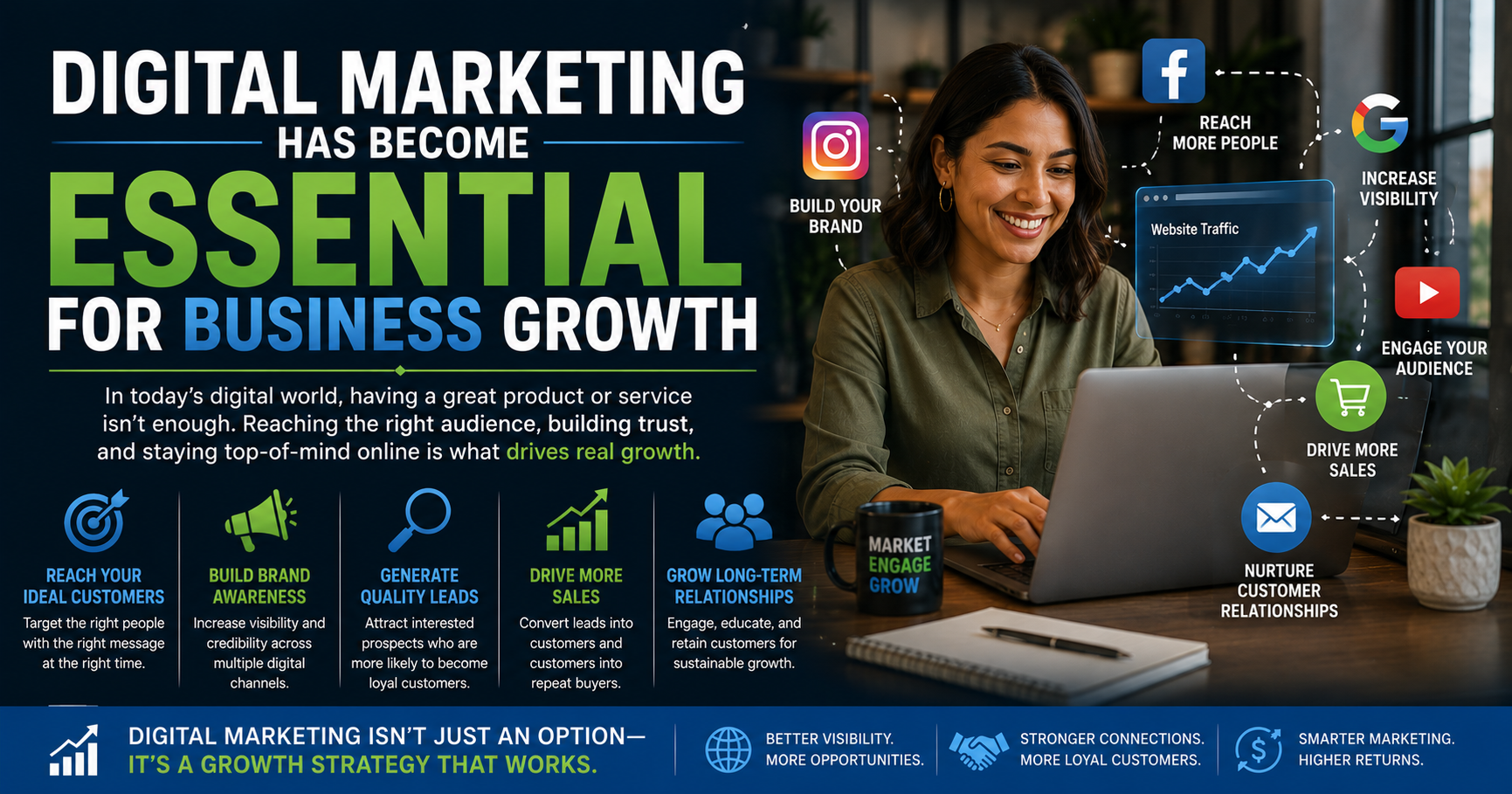
Why Digital Marketing Has Become Essential for Business Expansion


Reaching Customers Where They Spend Time

The way consumers discover products and services has changed dramatically over the past decade. Traditional advertising methods such as newspaper ads, radio spots, billboards, and direct mail campaigns once dominated marketing budgets. While many of these channels still have value, the reality is that today’s consumers spend a significant portion of their time online, and businesses that want to remain competitive must adapt accordingly.

Whether searching for a local service provider, researching a major purchase, comparing products, or reading customer reviews, consumers increasingly begin their buying journey through digital channels. Search engines, social media platforms, online directories, video content, email newsletters, and review websites have become essential parts of the modern purchasing process.

As a result, digital marketing has evolved from an optional strategy into a fundamental business necessity.

The Digital Consumer Journey

Modern consumers are more informed than ever before.

Before making purchasing decisions, many people conduct extensive research online. They compare prices, read reviews, watch product demonstrations, visit company websites, and seek recommendations from friends, influencers, and online communities.

In many cases, potential customers form opinions about a business long before speaking with a sales representative or visiting a physical location.

This shift in consumer behavior means businesses must establish a strong online presence wherever their target audience spends time.

If a company cannot be found online, consumers may assume it is less credible or less established than competitors who maintain active digital profiles.

Search Engines Drive Discovery

Search engines remain one of the most powerful tools for connecting businesses with potential customers.

Every day, millions of people use search engines to find answers, compare products, locate service providers, and solve problems. Businesses that appear prominently in search results often gain a significant advantage because they are visible at the exact moment consumers are actively seeking solutions.

Search Engine Optimization (SEO) helps businesses improve their visibility in organic search results. By creating relevant content, optimizing website performance, and targeting valuable keywords, companies can attract highly qualified traffic without relying exclusively on paid advertising.

For many businesses, appearing on the first page of search results can lead to increased website traffic, more inquiries, and higher sales.

Social Media Has Become a Business Essential

Social media platforms have transformed the relationship between businesses and consumers.

Platforms such as Facebook, Instagram, LinkedIn, YouTube, TikTok, and X provide businesses with opportunities to engage directly with their audiences, share valuable content, showcase products, and build brand awareness.

Unlike traditional advertising, social media encourages two-way communication. Businesses can interact with customers, answer questions, address concerns, and create communities around their brands.

Consumers increasingly expect businesses to maintain active social media profiles. A strong social media presence can help build trust, increase visibility, and create stronger customer relationships.

Companies that consistently provide valuable and engaging content often develop loyal audiences that support long-term growth.

Content Marketing Builds Trust and Authority

One of the most effective forms of digital marketing is content marketing.

Rather than focusing solely on promotional messages, content marketing involves creating educational, informative, and engaging content that helps consumers solve problems or answer questions.

This may include:

  • Blog articles
  • Videos
  • Podcasts
  • Infographics
  • E-books
  • Webinars
  • Industry reports
  • Social media content

When businesses consistently provide valuable information, they position themselves as trusted authorities within their industries.

Consumers are more likely to purchase from companies they view as knowledgeable and credible. Content marketing helps establish that trust while improving search engine visibility and supporting broader marketing goals.

Email Marketing Remains Highly Effective

Despite the growth of social media and other digital channels, email marketing continues to be one of the most effective methods for communicating with customers.

Email allows businesses to maintain direct contact with prospects and existing customers while delivering personalized messages based on interests, behaviors, and purchasing history.

Successful email campaigns can nurture leads, promote special offers, announce new products, share educational content, and strengthen customer relationships.

Unlike social media platforms, where algorithm changes can affect visibility, email provides businesses with direct access to their audiences.

For many organizations, email marketing remains one of the highest-performing channels for generating sales and customer engagement.

Online Reviews Influence Buying Decisions

Consumer trust increasingly depends on online reputation.

Before making purchasing decisions, many customers read reviews on platforms such as Google, Yelp, Facebook, and industry-specific websites.

Positive reviews help establish credibility and encourage potential customers to choose a business over competitors. Negative reviews, if not properly managed, can discourage prospects and impact revenue.

Online reputation management has therefore become a critical component of digital marketing.

Businesses that actively monitor reviews, respond professionally to feedback, and prioritize customer satisfaction often enjoy stronger reputations and greater consumer confidence.

Data Makes Marketing More Effective

One of the greatest advantages of digital marketing is the ability to measure performance.

Unlike many traditional advertising methods, digital marketing provides detailed data about customer behavior and campaign effectiveness.

Businesses can track:

  • Website traffic
  • Conversion rates
  • Customer engagement
  • Advertising performance
  • Email open rates
  • Social media interactions
  • Lead generation metrics

These insights allow business owners to make informed decisions, improve campaigns, and allocate marketing budgets more efficiently.

Data-driven marketing helps businesses identify what is working, eliminate ineffective strategies, and continuously optimize results.

The Future of Business Growth Is Digital

Consumer habits continue to shift toward digital channels, and there is little indication that this trend will slow down.

As technology advances and online activity increases, businesses that embrace digital marketing will likely be better positioned to attract customers, generate leads, and build sustainable growth.

Companies that invest in search visibility, content creation, social media engagement, email marketing, and online reputation management often gain a competitive advantage in increasingly crowded markets.

Digital marketing is no longer simply a marketing tactic—it is a business growth strategy.

The businesses that consistently reach customers where they spend time, provide value through digital channels, and build meaningful online relationships are frequently the companies that experience the strongest long-term success. In today’s marketplace, visibility, engagement, and trust are increasingly earned online, making digital marketing one of the most important investments a business can make.


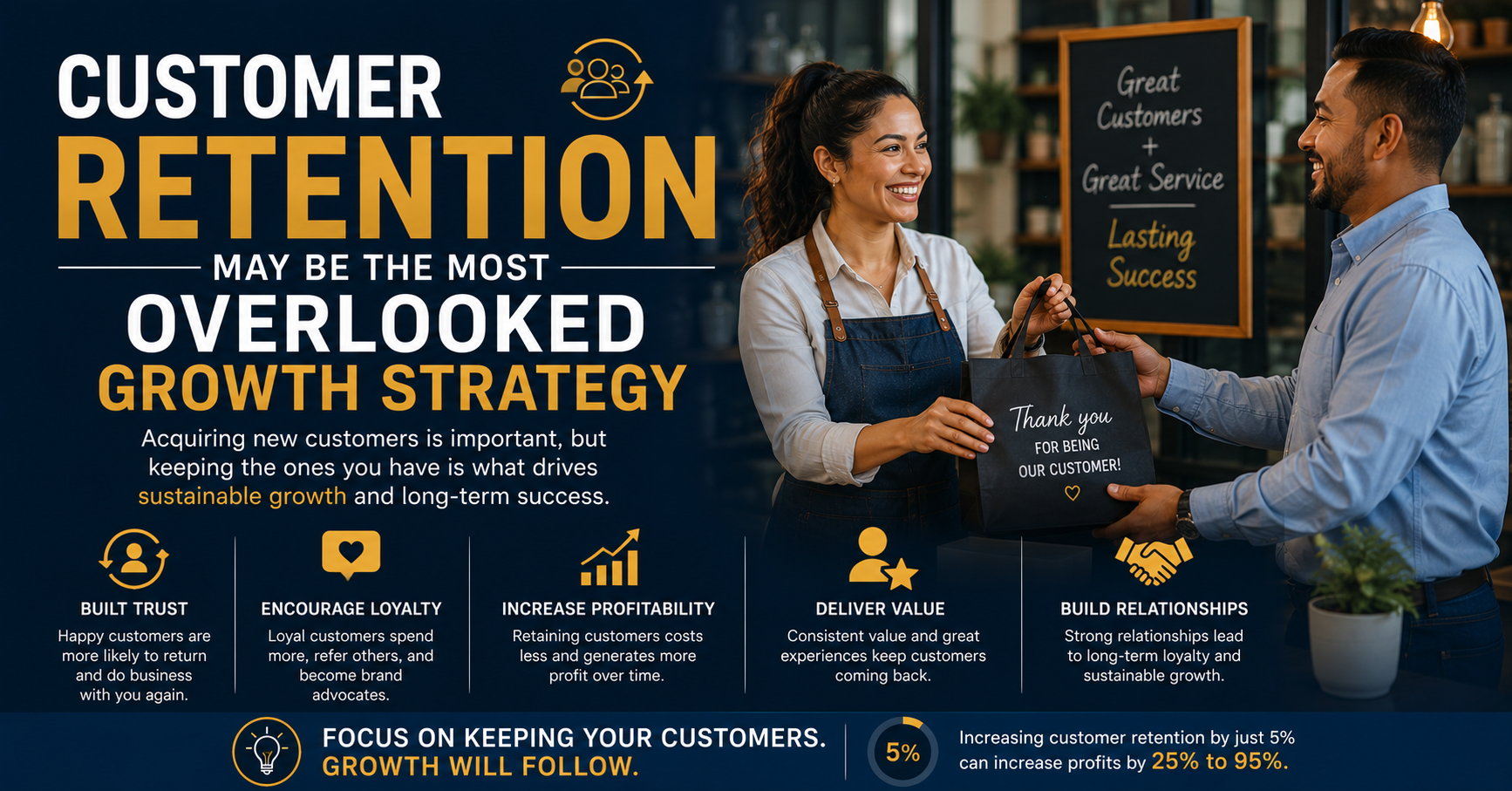
Customer Retention May Be the Fastest Path to Business Growth


Keeping Existing Customers Engaged

Many businesses devote substantial time, energy, and financial resources to attracting new customers. Advertising campaigns, social media promotions, search engine marketing, and lead generation strategies are often viewed as essential drivers of growth. While acquiring new customers is certainly important, many organizations overlook one of the most valuable assets they already possess: their existing customers.

In today’s competitive business environment, customer retention has become one of the most effective and cost-efficient growth strategies available. Research consistently shows that retaining customers often costs significantly less than acquiring new ones, while generating greater long-term profitability and stability.

Businesses that prioritize customer retention frequently enjoy stronger revenue, increased referrals, improved brand reputation, and more predictable growth compared to companies that focus exclusively on customer acquisition.

The Value of Loyal Customers

Loyal customers provide far more value than a single transaction.

When customers have positive experiences with a business, they are more likely to return for future purchases. Over time, these repeat purchases can dramatically increase the lifetime value of each customer relationship.

A customer who makes five purchases over several years is often far more valuable than a new customer who makes only one purchase and never returns.

Beyond repeat business, loyal customers frequently become brand advocates. They recommend products and services to friends, family members, coworkers, and social media followers. These referrals can generate new business without the high costs associated with traditional advertising.

Word-of-mouth marketing remains one of the most trusted forms of promotion, making loyal customers a powerful source of long-term growth.

Customer Retention Improves Profitability

One reason customer retention is so valuable is that existing customers are often easier to serve than new customers.

New customers typically require significant marketing investments, sales efforts, education, and trust-building before making purchasing decisions.

Existing customers, on the other hand, already understand the company’s products, services, and value proposition. They have established trust and are generally more comfortable making additional purchases.

Because less effort is required to convert repeat buyers, businesses often achieve higher profit margins from existing customer relationships.

Over time, these efficiencies can have a meaningful impact on overall profitability.

Exceptional Customer Service Builds Loyalty

One of the most important drivers of customer retention is exceptional customer service.

Consumers have more choices than ever before. In many industries, competing products and services offer similar features and pricing. As a result, customer experience often becomes the deciding factor.

Businesses that consistently exceed expectations create positive impressions that encourage repeat engagement.

Simple actions such as responding quickly to inquiries, resolving issues professionally, honoring commitments, and treating customers with respect can significantly strengthen relationships.

Customers remember how businesses make them feel. Positive experiences often create emotional connections that encourage long-term loyalty.

Communication Keeps Relationships Strong

Maintaining regular communication is another important component of customer retention.

Many businesses only contact customers when they are trying to make a sale. However, successful organizations understand the importance of staying connected between transactions.

Email newsletters, educational content, company updates, special offers, and personalized messages help keep businesses top of mind.

Consistent communication reminds customers of the value the company provides while reinforcing the relationship.

It also creates opportunities to gather feedback, answer questions, and identify additional ways to serve customer needs.

Businesses that communicate effectively often build stronger trust and greater customer engagement over time.

Personalization Creates Better Experiences

Today’s consumers increasingly expect personalized experiences.

Customers appreciate businesses that understand their preferences, recognize their history, and tailor interactions accordingly.

Personalization can take many forms, including customized recommendations, targeted offers, birthday messages, follow-up communications, and loyalty rewards based on purchasing behavior.

Even small gestures can have a significant impact.

When customers feel recognized and valued as individuals rather than simply transactions, they are more likely to remain loyal to the brand.

Technology and customer relationship management tools have made personalization more accessible than ever before, allowing businesses of all sizes to deliver more meaningful customer experiences.

Loyalty Programs Encourage Repeat Business

Many successful companies use loyalty programs to strengthen customer retention.

These programs reward customers for repeat purchases and continued engagement. Rewards may include discounts, exclusive offers, points systems, VIP memberships, early access to products, or special customer appreciation benefits.

Loyalty programs provide customers with additional incentives to continue doing business with the company rather than exploring competitors.

When designed effectively, these programs create a win-win situation. Customers receive added value while businesses benefit from increased retention and higher customer lifetime value.

Proactive Support Makes a Difference

Customer retention is often influenced by what happens after the sale.

Businesses that proactively support customers tend to build stronger relationships than those that only react when problems arise.

Following up after purchases, checking on customer satisfaction, providing educational resources, and offering assistance before issues develop can create positive experiences that reinforce loyalty.

Proactive support demonstrates that a company genuinely cares about customer success rather than simply completing transactions.

This commitment to service often becomes a key differentiator in competitive markets.

Online Reviews and Reputation Matter

Retained customers frequently contribute to a company’s online reputation.

Satisfied customers are more likely to leave positive reviews on platforms such as Google, Facebook, Yelp, and industry-specific review sites.

These reviews influence purchasing decisions and help build trust among prospective customers.

A strong reputation supported by loyal customers can become a powerful competitive advantage.

Businesses that consistently deliver positive experiences often benefit from both repeat business and increased visibility through customer-generated reviews and recommendations.

Customer Retention Supports Sustainable Growth

While acquiring new customers will always remain an important business objective, long-term success often depends on the ability to retain and engage existing customers.

Customer retention creates a foundation for sustainable growth by generating recurring revenue, increasing profitability, reducing marketing costs, and strengthening brand reputation.

Businesses that invest in customer relationships often discover that growth becomes more predictable and resilient over time.

In increasingly competitive markets, customer retention may represent one of the most overlooked opportunities for business expansion.

Companies that focus on delivering exceptional experiences, maintaining meaningful communication, rewarding loyalty, and supporting customer success are often the organizations that achieve the strongest long-term results.

Ultimately, keeping existing customers engaged is not simply a customer service strategy—it is a growth strategy. The businesses that prioritize customer retention today are often the ones best positioned for sustained success tomorrow.