
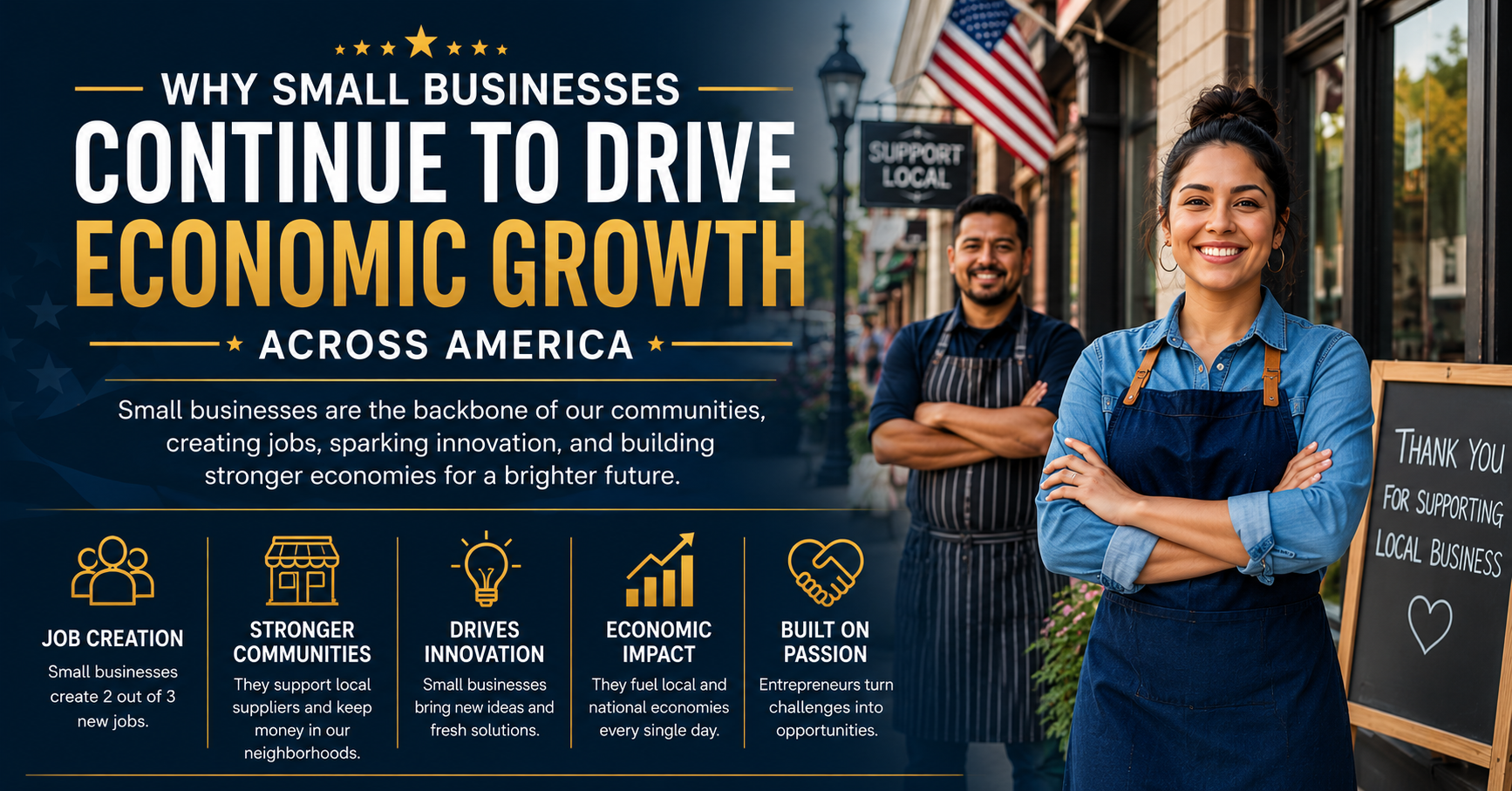
Why Small Businesses Are Becoming the Backbone of Local Economies


Community Growth Starts With Entrepreneurs

Across cities and towns throughout America, small businesses continue to serve as the foundation of local economic growth and community development. While large corporations often dominate national headlines, it is entrepreneurs and small business owners who frequently create the unique character, economic vitality, and opportunities that help communities thrive.

From family-owned restaurants and neighborhood retail stores to construction companies, healthcare providers, technology startups, and professional service firms, entrepreneurs play a vital role in strengthening local economies. Their contributions extend far beyond simply selling products or services. They create jobs, support local organizations, invest in community initiatives, and help generate the economic activity that keeps communities growing.

As economic conditions continue to evolve, many experts believe that the long-term success of local communities will increasingly depend on the ability of entrepreneurs to innovate, adapt, and build sustainable businesses that serve local needs.

Small Businesses Are Powerful Economic Engines

Entrepreneurs contribute significantly to economic development because they create opportunities where none previously existed.

Every new business begins with an idea. Whether it’s solving a problem, meeting a consumer need, or improving an existing service, entrepreneurs identify opportunities and transform them into businesses that generate revenue and employment.

When a business opens its doors, it often hires local employees, purchases supplies from nearby vendors, leases commercial space, and pays local taxes. These activities create a ripple effect throughout the community.

For example, a new restaurant may hire cooks, servers, managers, and cleaning staff. It may purchase ingredients from local suppliers, use local contractors for maintenance, and partner with nearby businesses for marketing efforts. The wages earned by employees are then spent throughout the community, supporting additional businesses and services.

This cycle of economic activity helps create stronger and more resilient local economies.

Job Creation Begins With Entrepreneurs

One of the most important contributions entrepreneurs make is job creation.

Small businesses collectively employ millions of workers across the United States and often provide employment opportunities that larger organizations may overlook.

Entrepreneurs frequently hire individuals from within their communities, creating jobs for local residents and helping families achieve greater financial stability.

In many towns and cities, small businesses represent one of the largest sources of employment. They offer positions across a wide variety of industries, including retail, hospitality, healthcare, construction, professional services, education, and technology.

As businesses grow, they often create additional opportunities for advancement, training, and career development.

This ability to generate employment not only benefits individual workers but also strengthens the broader economic health of entire communities.

Local Businesses Keep Money in Local Communities

Economic studies consistently show that locally owned businesses often reinvest a greater percentage of their revenue back into their communities compared to national chains or large corporations.

When consumers spend money at local businesses, more of those dollars tend to remain within the local economy.

Business owners frequently purchase goods and services from nearby suppliers, hire local contractors, support community organizations, and contribute to local charitable causes. This circulation of money helps create additional economic activity and strengthens the overall financial health of the region.

Many entrepreneurs also sponsor youth sports teams, community events, nonprofit organizations, and educational programs that directly benefit local residents.

Their investments help improve the quality of life within their communities while fostering stronger relationships among residents and businesses.

Innovation Often Starts Small

Entrepreneurs are frequently responsible for some of the most innovative ideas and solutions in the marketplace.

Unlike larger organizations that may face complex approval processes and bureaucratic structures, small businesses can often adapt quickly to changing customer needs and market conditions.

This flexibility allows entrepreneurs to experiment with new products, services, technologies, and business models.

Many successful companies that operate globally today began as small entrepreneurial ventures founded by individuals who recognized opportunities that others overlooked.

Innovation is not limited to technology startups. Entrepreneurs across every industry continue finding creative ways to improve customer experiences, streamline operations, and solve everyday challenges.

Their willingness to take risks and pursue new ideas helps drive economic progress and industry advancement.

Technology Is Expanding Opportunities

Modern technology has dramatically increased the ability of entrepreneurs to compete with larger organizations.

Digital marketing, social media, e-commerce platforms, cloud-based software, and artificial intelligence tools allow small businesses to reach customers far beyond their local markets.

A business owner operating from a small town can now sell products nationwide, offer virtual services globally, or build an online audience that generates revenue from multiple sources.

Technology has reduced many of the barriers that once prevented entrepreneurs from competing on a larger scale.

At the same time, these tools enable businesses to maintain their local roots while expanding their reach and increasing profitability.

Consumers Value Personal Connections

Another reason small businesses remain important is the personalized experience they often provide.

Many consumers appreciate doing business with companies that know their names, understand their needs, and actively participate in the community.

Small business owners frequently build strong relationships with customers through exceptional service, local involvement, and direct communication.

These personal connections help create trust and loyalty that can be difficult for larger organizations to replicate.

As consumers increasingly seek authentic experiences and meaningful relationships with brands, local businesses continue to enjoy unique advantages.

The Future of Local Economies

Looking ahead, entrepreneurs will likely play an even greater role in shaping the future of local communities.

Economic growth, job creation, innovation, and community development are all closely tied to the success of small businesses.

Communities that encourage entrepreneurship through education, mentorship, access to capital, and supportive business environments often position themselves for stronger long-term growth.

Entrepreneurs bring energy, creativity, and determination to the marketplace. They identify opportunities, solve problems, and create value for customers while strengthening the communities they call home.

The continued success of entrepreneurs may ultimately determine the strength, resilience, and prosperity of many local economies for generations to come. As communities evolve and new challenges emerge, one thing remains clear: community growth starts with entrepreneurs.



The Entrepreneurial Mindset That Separates Success From Failure


Thinking Like a Business Builder

While funding, products, services, and marketing strategies are all important components of business success, many successful entrepreneurs believe that mindset is often the true deciding factor between long-term success and failure. The way entrepreneurs think, respond to challenges, and approach opportunities frequently determines whether they can navigate the inevitable obstacles that come with building a business.

Entrepreneurship is rarely a straight path. Markets change, customer needs evolve, competitors emerge, and unexpected setbacks can appear without warning. While these realities can discourage some individuals, successful entrepreneurs often develop a different perspective. They learn to view challenges as opportunities to improve, innovate, and grow rather than as reasons to quit.

In today’s rapidly changing economy, developing a strong entrepreneurial mindset may be one of the most valuable investments a person can make.

Success Begins With Perspective

One of the defining characteristics of successful entrepreneurs is their ability to think differently about problems.

While many people see obstacles, entrepreneurs often see opportunities. They recognize unmet needs, identify inefficiencies, and search for ways to create value where others may see limitations.

This mindset allows entrepreneurs to remain optimistic even during difficult periods.

Economic downturns, changing consumer behaviors, and industry disruptions can create uncertainty. However, entrepreneurs who maintain a solution-oriented perspective are often better positioned to adapt and identify new opportunities.

Rather than asking, “Why is this happening?” they often ask, “How can I respond?” or “What opportunity exists within this challenge?”

This shift in thinking can make a significant difference in long-term outcomes.

Embracing Uncertainty

Entrepreneurship requires a willingness to operate in uncertain environments.

Unlike traditional employment, where responsibilities and compensation are often predictable, entrepreneurs regularly make decisions without having all the answers.

Launching a new product, entering a new market, hiring employees, or investing in growth initiatives all involve varying levels of risk.

Successful business builders understand that uncertainty is part of the entrepreneurial journey. Instead of waiting for perfect conditions, they gather information, evaluate potential outcomes, and take calculated action.

They recognize that progress often comes from making informed decisions rather than achieving absolute certainty.

This ability to move forward despite uncertainty frequently separates entrepreneurs from individuals who remain stuck in analysis and hesitation.

Failure Is Often Part of the Process

Many of the world’s most successful entrepreneurs have experienced significant failures before achieving success.

Products fail. Marketing campaigns underperform. Partnerships dissolve. Business models require adjustments.

The difference is that successful entrepreneurs rarely allow failure to define them.

Instead, they view setbacks as valuable learning experiences.

When a strategy does not produce the desired outcome, they analyze what happened, identify lessons learned, and apply those insights moving forward.

Every challenge becomes an opportunity to improve decision-making and strengthen the business.

This willingness to learn from mistakes helps entrepreneurs build resilience and develop greater confidence over time.

Discipline Creates Momentum

While motivation can be helpful, discipline is often what sustains long-term success.

Many entrepreneurs discover that building a business requires consistent effort over extended periods of time.

There are days when motivation is high and progress comes easily. There are also days when obstacles arise and results seem slow.

Successful business owners understand the importance of maintaining productive habits regardless of circumstances.

They establish routines, set goals, manage their time effectively, and focus on completing high-priority tasks.

Small, consistent actions performed over months and years often produce significant results.

Discipline helps entrepreneurs continue moving forward even when immediate rewards are not visible.

Adaptability Is a Competitive Advantage

Markets evolve constantly.

Consumer preferences change. New technologies emerge. Economic conditions fluctuate. Industries experience disruption.

Entrepreneurs who resist change often struggle to remain competitive.

By contrast, adaptable business owners view change as a normal part of growth.

They continuously evaluate market trends, gather customer feedback, and adjust strategies when necessary.

This flexibility enables them to remain relevant while identifying opportunities that competitors may overlook.

The ability to pivot when circumstances change has become increasingly important in today’s fast-moving business environment.

Adaptability is no longer simply an advantage—it is often a requirement for long-term success.

Lifelong Learning Fuels Growth

High-performing entrepreneurs are typically committed to continuous learning.

They understand that business ownership requires a broad range of skills, including leadership, communication, marketing, sales, finance, technology, and strategic planning.

Because industries evolve so quickly, entrepreneurs who stop learning often find themselves falling behind.

Successful business builders invest time in reading books, attending industry events, participating in training programs, networking with peers, and staying informed about emerging trends.

Many also seek mentors who can provide guidance based on real-world experience.

The willingness to learn and improve allows entrepreneurs to make better decisions and uncover new opportunities for growth.

Creating Value Beyond Profit

While profitability is essential for business sustainability, many successful entrepreneurs believe their primary mission is creating value.

Businesses exist because they solve problems.

Whether helping customers save time, improve health, increase productivity, reduce costs, or achieve personal goals, entrepreneurs succeed when they provide meaningful solutions.

This focus on value creation often leads to stronger customer relationships, greater loyalty, and long-term business success.

When entrepreneurs prioritize serving others, financial rewards frequently follow as a result of the value they provide.

This perspective helps business owners maintain focus on their customers rather than becoming solely driven by short-term profits.

Building Systems for Long-Term Success

Successful entrepreneurs also think beyond individual transactions.

Rather than constantly chasing the next sale, they focus on building systems that create sustainable growth.

These systems may include marketing processes, customer service frameworks, operational procedures, training programs, and technology solutions that improve efficiency and scalability.

By building systems rather than relying solely on personal effort, entrepreneurs create businesses that can continue growing over time.

This strategic thinking allows them to move from working in the business to working on the business.

The Entrepreneurial Mindset Matters More Than Ever

As technology continues to transform industries and economic conditions evolve, the importance of entrepreneurial thinking continues to grow.

Individuals who develop resilience, discipline, adaptability, and a commitment to lifelong learning are often better equipped to navigate uncertainty and capitalize on emerging opportunities.

Entrepreneurship is not simply about starting a business. It is about developing the mindset required to identify opportunities, solve problems, create value, and continue moving forward despite challenges.

In a world where change is constant, thinking like a business builder may be one of the most valuable skills anyone can develop.

Those who cultivate an entrepreneurial mindset position themselves not only to build successful businesses but also to create meaningful impact, generate opportunities for others, and contribute to stronger communities and economies. Ultimately, success begins with the way entrepreneurs think—and the actions they take because of it.