
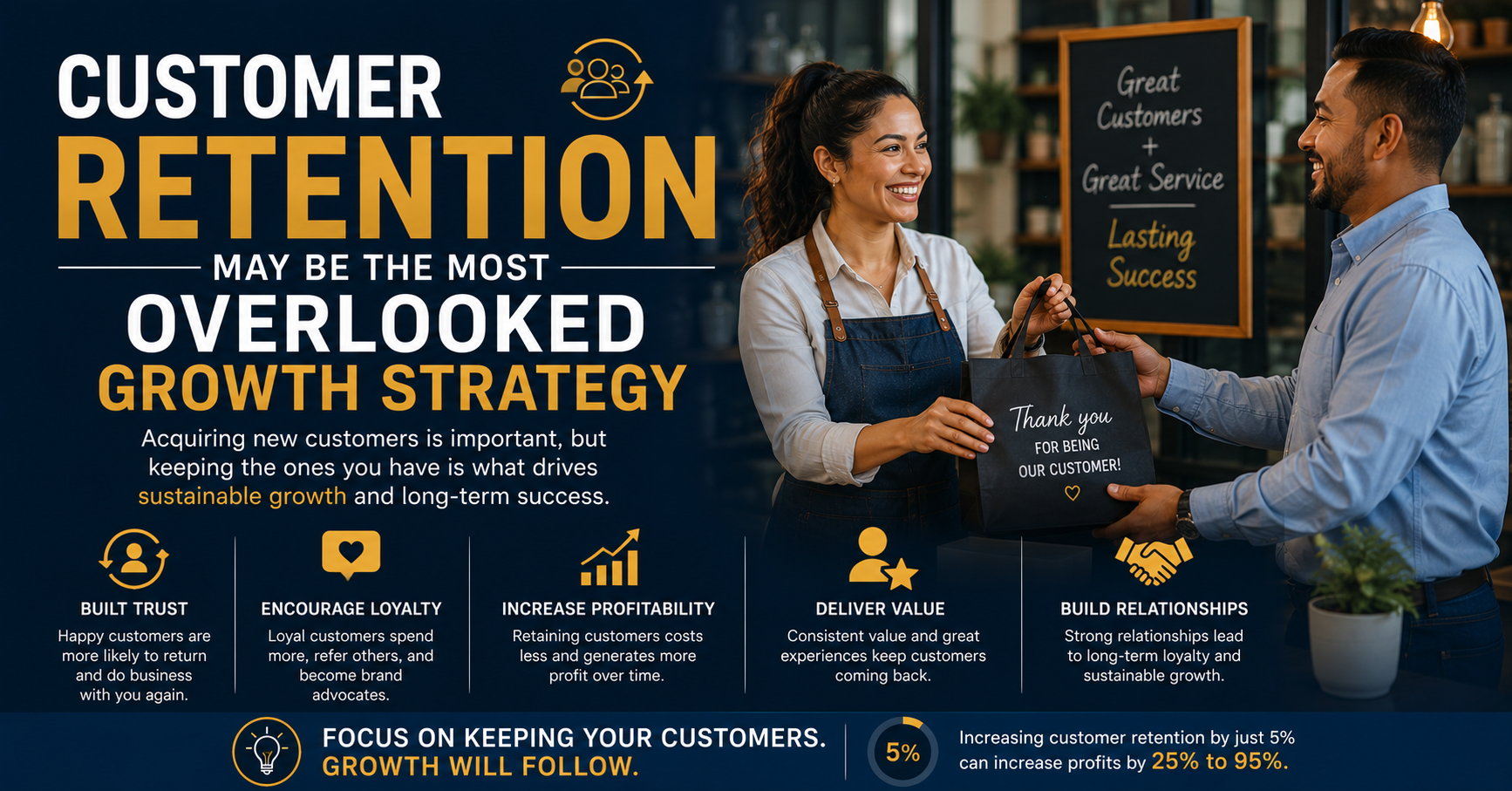
Customer Retention May Be the Fastest Path to Business Growth
Keeping Existing Customers Engaged
Many businesses devote substantial time, energy, and financial resources to attracting new customers. Advertising campaigns, social media promotions, search engine marketing, and lead generation strategies are often viewed as essential drivers of growth. While acquiring new customers is certainly important, many organizations overlook one of the most valuable assets they already possess: their existing customers.
In today’s competitive business environment, customer retention has become one of the most effective and cost-efficient growth strategies available. Research consistently shows that retaining customers often costs significantly less than acquiring new ones, while generating greater long-term profitability and stability.
Businesses that prioritize customer retention frequently enjoy stronger revenue, increased referrals, improved brand reputation, and more predictable growth compared to companies that focus exclusively on customer acquisition.
The Value of Loyal Customers
Loyal customers provide far more value than a single transaction.
When customers have positive experiences with a business, they are more likely to return for future purchases. Over time, these repeat purchases can dramatically increase the lifetime value of each customer relationship.
A customer who makes five purchases over several years is often far more valuable than a new customer who makes only one purchase and never returns.
Beyond repeat business, loyal customers frequently become brand advocates. They recommend products and services to friends, family members, coworkers, and social media followers. These referrals can generate new business without the high costs associated with traditional advertising.
Word-of-mouth marketing remains one of the most trusted forms of promotion, making loyal customers a powerful source of long-term growth.
Customer Retention Improves Profitability
One reason customer retention is so valuable is that existing customers are often easier to serve than new customers.
New customers typically require significant marketing investments, sales efforts, education, and trust-building before making purchasing decisions.
Existing customers, on the other hand, already understand the company’s products, services, and value proposition. They have established trust and are generally more comfortable making additional purchases.
Because less effort is required to convert repeat buyers, businesses often achieve higher profit margins from existing customer relationships.
Over time, these efficiencies can have a meaningful impact on overall profitability.
Exceptional Customer Service Builds Loyalty
One of the most important drivers of customer retention is exceptional customer service.
Consumers have more choices than ever before. In many industries, competing products and services offer similar features and pricing. As a result, customer experience often becomes the deciding factor.
Businesses that consistently exceed expectations create positive impressions that encourage repeat engagement.
Simple actions such as responding quickly to inquiries, resolving issues professionally, honoring commitments, and treating customers with respect can significantly strengthen relationships.
Customers remember how businesses make them feel. Positive experiences often create emotional connections that encourage long-term loyalty.
Communication Keeps Relationships Strong
Maintaining regular communication is another important component of customer retention.
Many businesses only contact customers when they are trying to make a sale. However, successful organizations understand the importance of staying connected between transactions.
Email newsletters, educational content, company updates, special offers, and personalized messages help keep businesses top of mind.
Consistent communication reminds customers of the value the company provides while reinforcing the relationship.
It also creates opportunities to gather feedback, answer questions, and identify additional ways to serve customer needs.
Businesses that communicate effectively often build stronger trust and greater customer engagement over time.
Personalization Creates Better Experiences
Today’s consumers increasingly expect personalized experiences.
Customers appreciate businesses that understand their preferences, recognize their history, and tailor interactions accordingly.
Personalization can take many forms, including customized recommendations, targeted offers, birthday messages, follow-up communications, and loyalty rewards based on purchasing behavior.
Even small gestures can have a significant impact.
When customers feel recognized and valued as individuals rather than simply transactions, they are more likely to remain loyal to the brand.
Technology and customer relationship management tools have made personalization more accessible than ever before, allowing businesses of all sizes to deliver more meaningful customer experiences.
Loyalty Programs Encourage Repeat Business
Many successful companies use loyalty programs to strengthen customer retention.
These programs reward customers for repeat purchases and continued engagement. Rewards may include discounts, exclusive offers, points systems, VIP memberships, early access to products, or special customer appreciation benefits.
Loyalty programs provide customers with additional incentives to continue doing business with the company rather than exploring competitors.
When designed effectively, these programs create a win-win situation. Customers receive added value while businesses benefit from increased retention and higher customer lifetime value.
Proactive Support Makes a Difference
Customer retention is often influenced by what happens after the sale.
Businesses that proactively support customers tend to build stronger relationships than those that only react when problems arise.
Following up after purchases, checking on customer satisfaction, providing educational resources, and offering assistance before issues develop can create positive experiences that reinforce loyalty.
Proactive support demonstrates that a company genuinely cares about customer success rather than simply completing transactions.
This commitment to service often becomes a key differentiator in competitive markets.
Online Reviews and Reputation Matter
Retained customers frequently contribute to a company’s online reputation.
Satisfied customers are more likely to leave positive reviews on platforms such as Google, Facebook, Yelp, and industry-specific review sites.
These reviews influence purchasing decisions and help build trust among prospective customers.
A strong reputation supported by loyal customers can become a powerful competitive advantage.
Businesses that consistently deliver positive experiences often benefit from both repeat business and increased visibility through customer-generated reviews and recommendations.
Customer Retention Supports Sustainable Growth
While acquiring new customers will always remain an important business objective, long-term success often depends on the ability to retain and engage existing customers.
Customer retention creates a foundation for sustainable growth by generating recurring revenue, increasing profitability, reducing marketing costs, and strengthening brand reputation.
Businesses that invest in customer relationships often discover that growth becomes more predictable and resilient over time.
In increasingly competitive markets, customer retention may represent one of the most overlooked opportunities for business expansion.
Companies that focus on delivering exceptional experiences, maintaining meaningful communication, rewarding loyalty, and supporting customer success are often the organizations that achieve the strongest long-term results.
Ultimately, keeping existing customers engaged is not simply a customer service strategy—it is a growth strategy. The businesses that prioritize customer retention today are often the ones best positioned for sustained success tomorrow.
Recent Comments